How to Build an Enterprise AI Assistant for Production

A concise blueprint for taking an enterprise AI assistant to production: permission-aware retrieval, authorized tool calls, runtime controls, and evaluation-gated releases.

Enterprise AI assistant architecture showing identity and rate limits at the edge, runtime budgets, tool authorization, telemetry, and evaluated releases
::TLDR

To build a production enterprise AI assistant, pair an LLM with versioned, permission-filtered company knowledge and approved business tools. Enforce authorization in application code and at every tool boundary, not just in prompts. Add rate limits, deadlines, task budgets and retries, then trace every request and gate releases on evaluations.

How to Build an Enterprise AI Assistant for Production

A production enterprise assistant combines an LLM with company knowledge, approved business tools, enforceable permissions, and operational controls.

Core architecture

  • Role and instructions: define the assistant's purpose and expected behavior.
  • Retrieval: supply current, versioned company information and filter it for the authenticated employee.
  • Tools: connect approved HR, IT, and other business workflows.
  • Authorization and guardrails: enforce access and approval checks in application code and downstream services, not only in prompts.
  • Operations: control caching, model routing, rate limits, concurrency, deadlines, retries, and task budgets.
  • Observability and evaluation: trace requests, test outcomes, version configuration, and gate releases.

Company context and retrieval

The runtime combines instructions, conversation context, permitted policy passages, and authorized tool results.
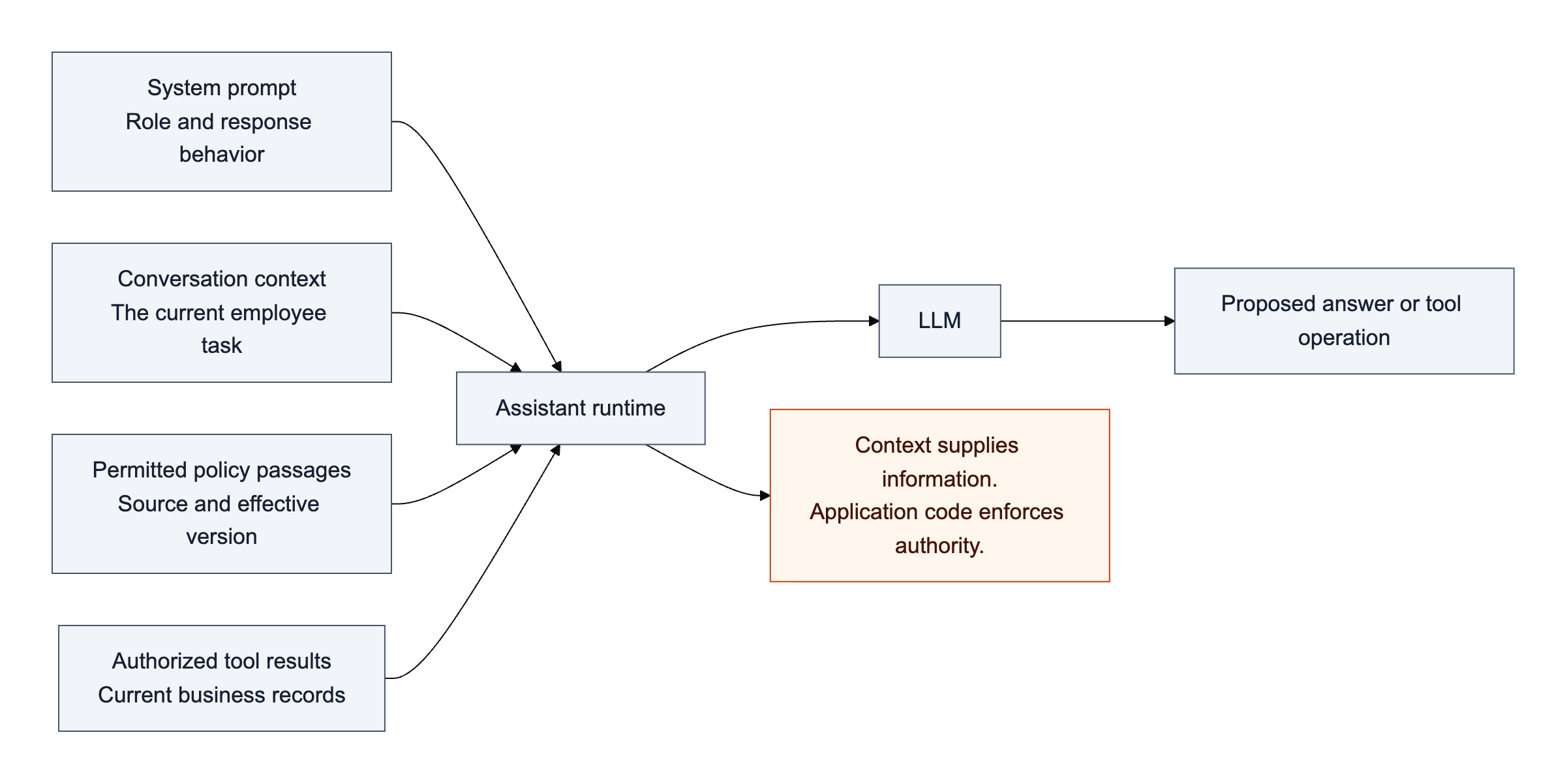
Enterprise assistant context: instructions, conversation history,
permitted policy passages, and authorized tool
results

Diagram source (Mermaid) · SVG

Tool authorization

A model may propose an operation, but the server must authenticate the caller and authorize the requested resource before protected data is returned.
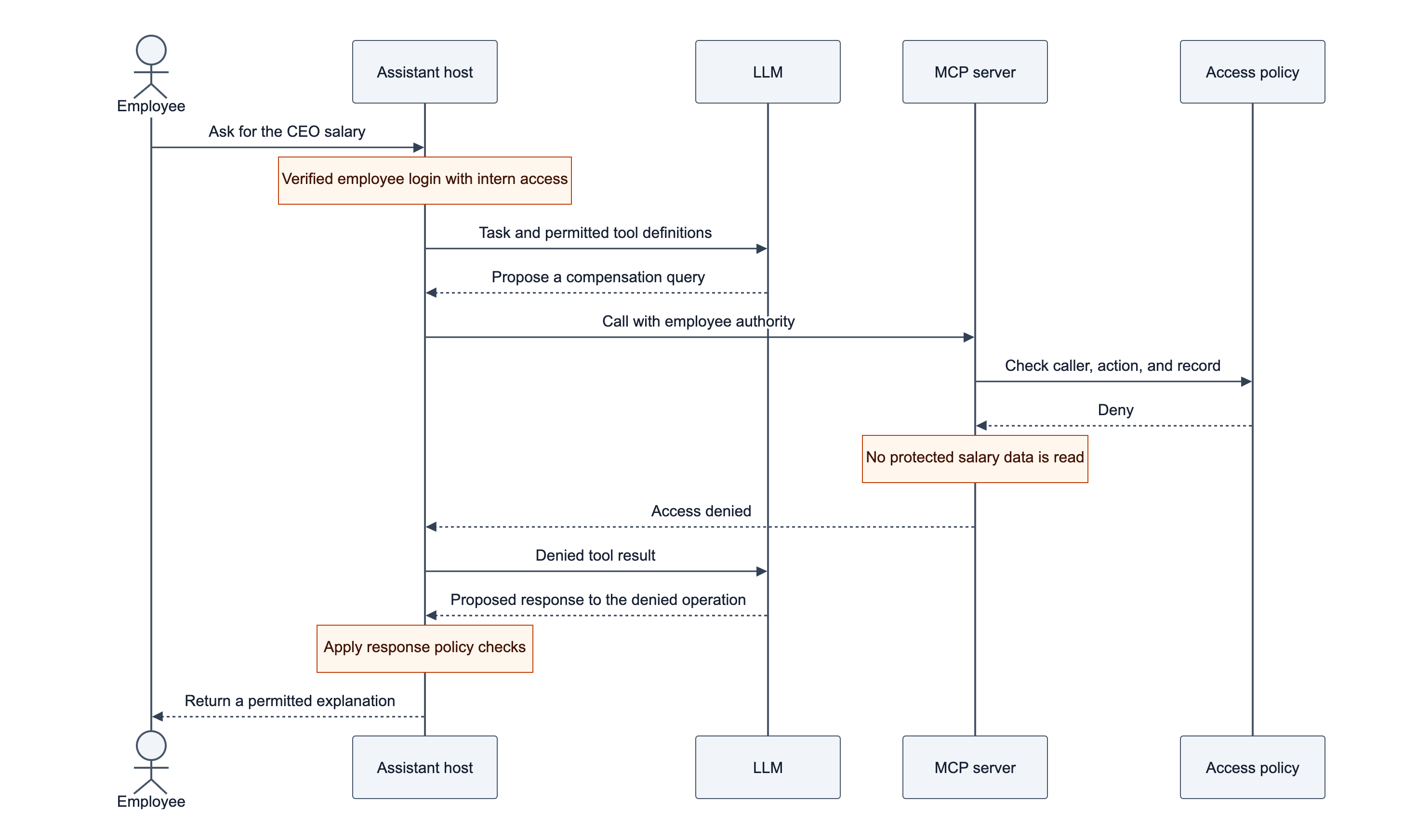
A salary request proposed by the model is denied by the MCP server
authorization
check

Diagram source (Mermaid) · SVG

Production architecture

Apply identity and admission controls at the edge, enforce task budgets and deadlines in the runtime, and keep authorization at each tool boundary. Instrument the system and evaluate changes before release.
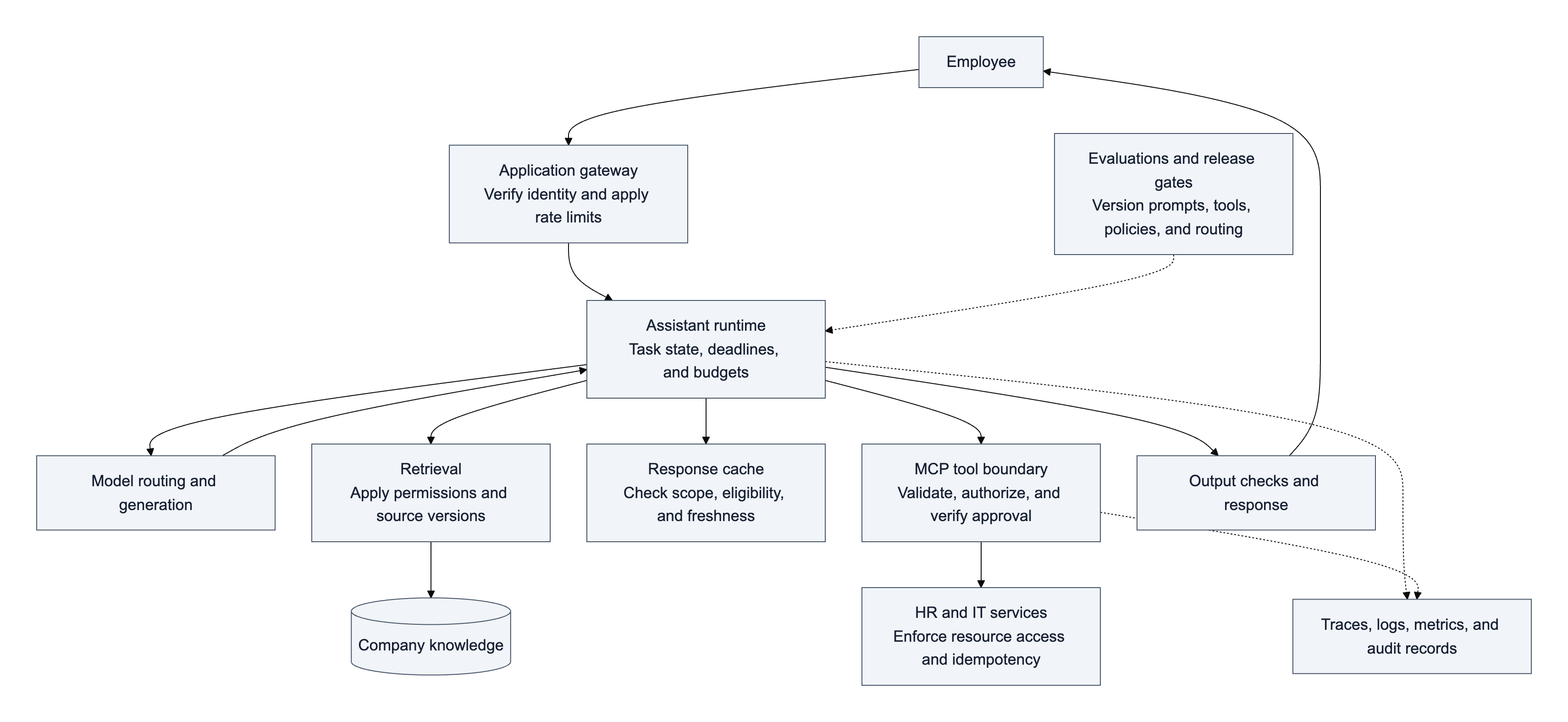
Enterprise AI assistant architecture with identity, rate limits,
runtime budgets, tool authorization, telemetry, and evaluated
releases

Diagram source (Mermaid) · SVG

Further reading

This is a concise Sanity-ready overview, not a verbatim copy of the full source article. See the original article for the complete discussion, implementation example, evaluation cases, and FAQs.

Frequently asked questions

What makes an enterprise AI assistant “production-ready”?

It goes beyond a chatbot. It combines an LLM with current company knowledge, approved business tools, permissions it actually enforces, and operational controls such as rate limits, deadlines, observability and release gates based on evaluations.

Can I enforce access control through the system prompt?

No. Prompts guide behavior but can’t guarantee security. Authentication and authorization must be enforced in application code and in downstream services, such as the MCP server, before any protected data is returned.

How should retrieval handle different employee permissions?

Retrieval should supply current, versioned company information and filter it for the authenticated employee. The model should only see passages that user is allowed to access.

What happens if the model requests data the user isn’t allowed to see?

The tool server checks the caller’s identity and authorization for that specific resource and denies the request. A model can propose an operation, but it can’t grant itself access.

How do you safely ship changes to an AI assistant?

Version your prompts, models and configuration, trace requests end to end, and run evaluation suites that gate each release. That way regressions are caught before they reach employees.

Subscribe to our newsletter